Apr 30, 2026
When forests return, life returns
Pollinators, bats, amphibians, and forest birds: how EcoTree’s restoration projects bring biodiversity back.
Restoring an ecosystem isn't about planting trees in rows. It's about recreating the conditions for life to flourish and letting nature do the rest.
Biodiversity is the living heart of the forest. It hosts nearly 80% of all terrestrial species and enables soils to remain fertile, water to circulate and be purified, and trees to grow and regenerate. The richer a forest is in species, the more it can withstand droughts, diseases, and climate change. Invisible yet essential, this web of interactions makes forests living, stable, and resilient ecosystems: far more than just a collection of trees.
For a long time, planting a tree was seen as a symbolic act: something positive, yet often reduced to timber production or carbon capture. At EcoTree, the vision goes much further. Restoring forests, rewetting peatlands, diversifying species, preserving old trees, and allowing natural processes to unfold is not just about reshaping landscapes; it is about bringing life back. Because when ecosystems recover, species return: pollinators, birds, bats, amphibians. When forests return, life returns.
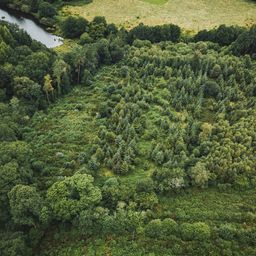
Restoring this balance means going beyond planting trees. Projects like ecosystem restoration in Pézarches or biodiversity hedges in Nysum: help rebuild habitats, reconnect landscapes, and allow life to return naturally.
In this article, we explore how these restoration actions translate into the tangible return of biodiversity, with concrete examples and observations from the field.
Restoring ecosystems: a holistic approach
Planting alone is not enough. The recovery of biodiversity depends on a combination of factors working together: a diversity of species that strengthens resilience, ecological connectivity that allows wildlife to move and thrive, and functional wetlands that regulate water and support a wide range of life. It also relies on the presence of habitat trees, rich forest edges and open clearings, as well as a minimal level of artificialisation. Above all, it requires long-term, sustainable management that respects natural processes and allows ecosystems to evolve over time. This holistic approach is rooted in ecosystem restoration, where each element plays a role in rebuilding balanced, living environments.
The relationships between insects, trees, and habitats are key to understanding how biodiversity functions in forest ecosystems.
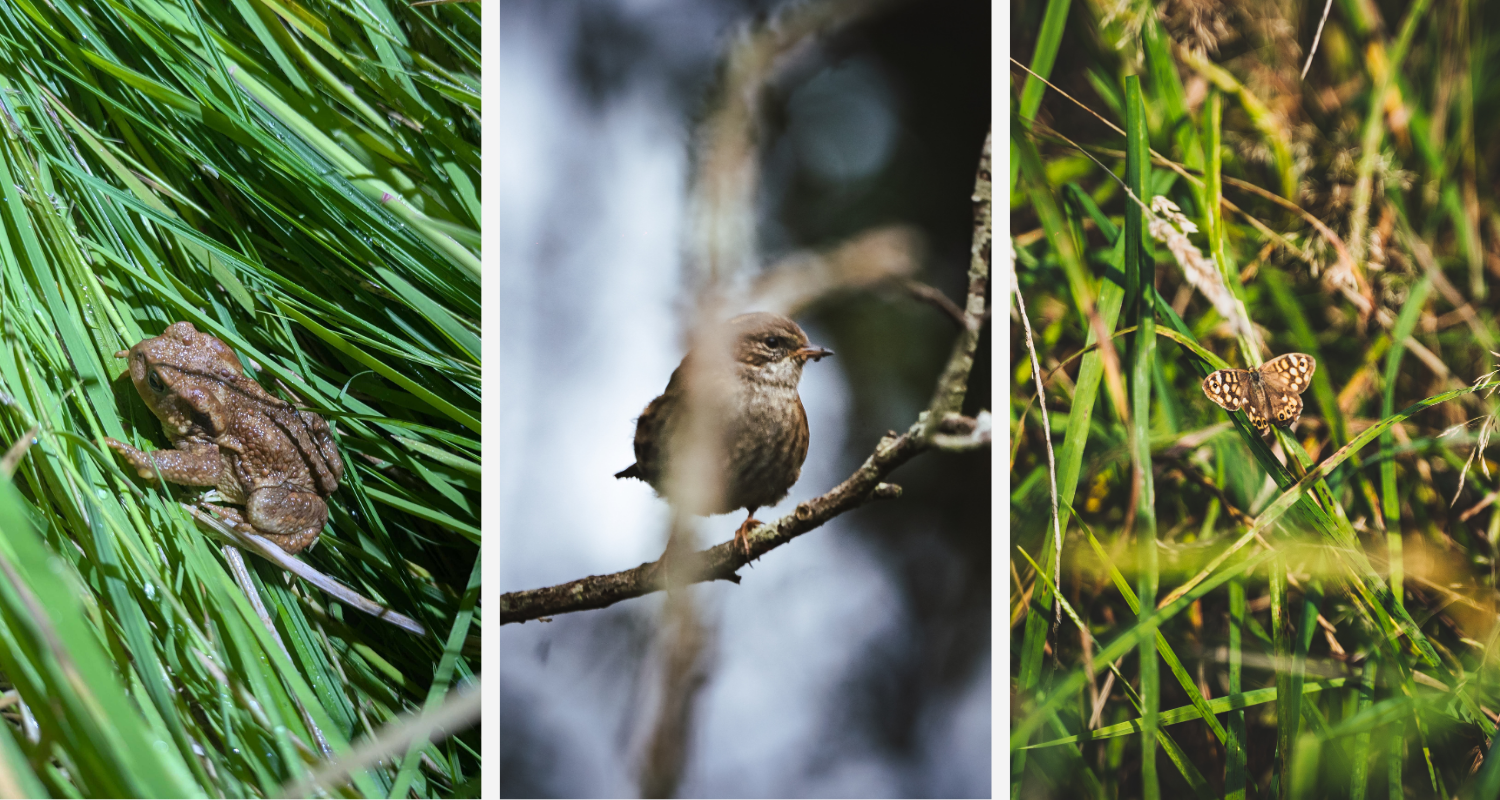
Pollinators: the first signs of life returning
Pollinators play an irreplaceable role in ecosystems, far beyond their contribution to agriculture. Yet their decline is accelerating wherever habitats disappear. Reversing this trend requires restoring floral resources throughout the seasons and this is precisely what certain forest and edge species provide: wild cherry, chestnut, lime, Norway maple, black locust, and wild fruit trees.
Planting melliferous hedges and flower-rich areas helps restore habitats for wild bees, bumblebees and butterflies. You can learn more about how to protect pollinators in 6 ways. Or you can explore the role of bees in biodiversity to learn more about them. On some sites, EcoTree also collaborates with beekeepers. Because a forest does not only grow trees: it sustains life.
Bats: indicators of a healthy ecosystem
Often unnoticed and sometimes misunderstood, bats are excellent indicators of ecological quality. Their presence depends on several conditions at once: tree cavities for shelter, site tranquillity, sufficient insect populations to hunt, ecological corridors for movement, and access to water sources. In transitioning forests where old hollow trees are still lacking, installing bat boxes can temporarily compensate for this deficit. Understanding the impact of our actions is key. Monitoring biodiversity, including insects, is a vital part of our mission, as it helps us accurately assess and protect ecosystem health.
Their return signals increasing ecological complexity.
Birds and wildlife: rebuilding natural habitats
Forest ecosystems across Europe have been significantly altered by human activity, leading to a decline in habitat quality and ecological complexity. As a result, many species struggle to find the conditions they need to survive and thrive.
Many forest species are currently suffering from habitat fragmentation, the loss of hedgerows, simplified agricultural landscapes, and the lack of standing deadwood. Ecological restoration therefore, goes far beyond planting. It includes installing nesting boxes, preserving habitat trees, creating biodiversity islands where deadwood can fulfil its ecological role, planting hedgerows, and diversifying vegetation layers. These actions help rebuild complete living conditions: feeding, breeding, shelter, and movement.
Nature is constantly changing, and observing how biodiversity returns through the seasons is a wonderful way to witness the impact of sustainable forest management. Species such as the European Turtle Dove rely on these ecological connections.
From monocultures to living ecosystems
EcoTree promotes mixed, continuous-cover forestry to increase resilience, enhance biodiversity, and create rich, diverse habitats. But restoration goes beyond forestry practices alone: it is about enabling ecosystems to evolve naturally over time.
Every living organism plays a vital role in the forest. You can learn more about how biodiversity shapes forest ecosystems and see how insects, trees, and habitats work together to keep nature in balance. Recent projects also highlight a growing focus on wetlands: true biodiversity hotspots.
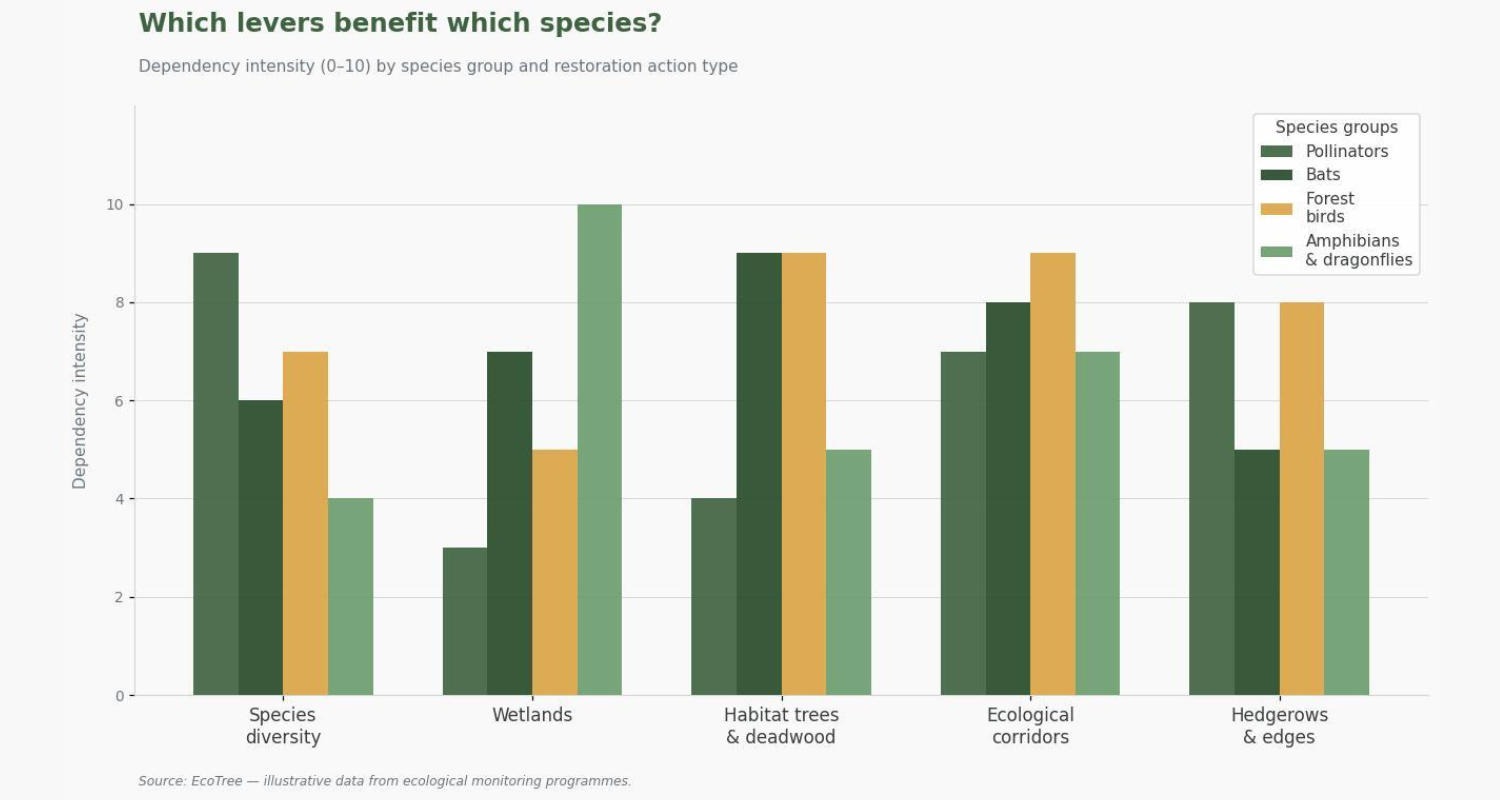
Dependency intensity by species group and type of restoration action:
What your contribution supports
Restoring biodiversity goes far beyond planting trees: this infographic shows the key actions that allow ecosystems to recover and life to return.
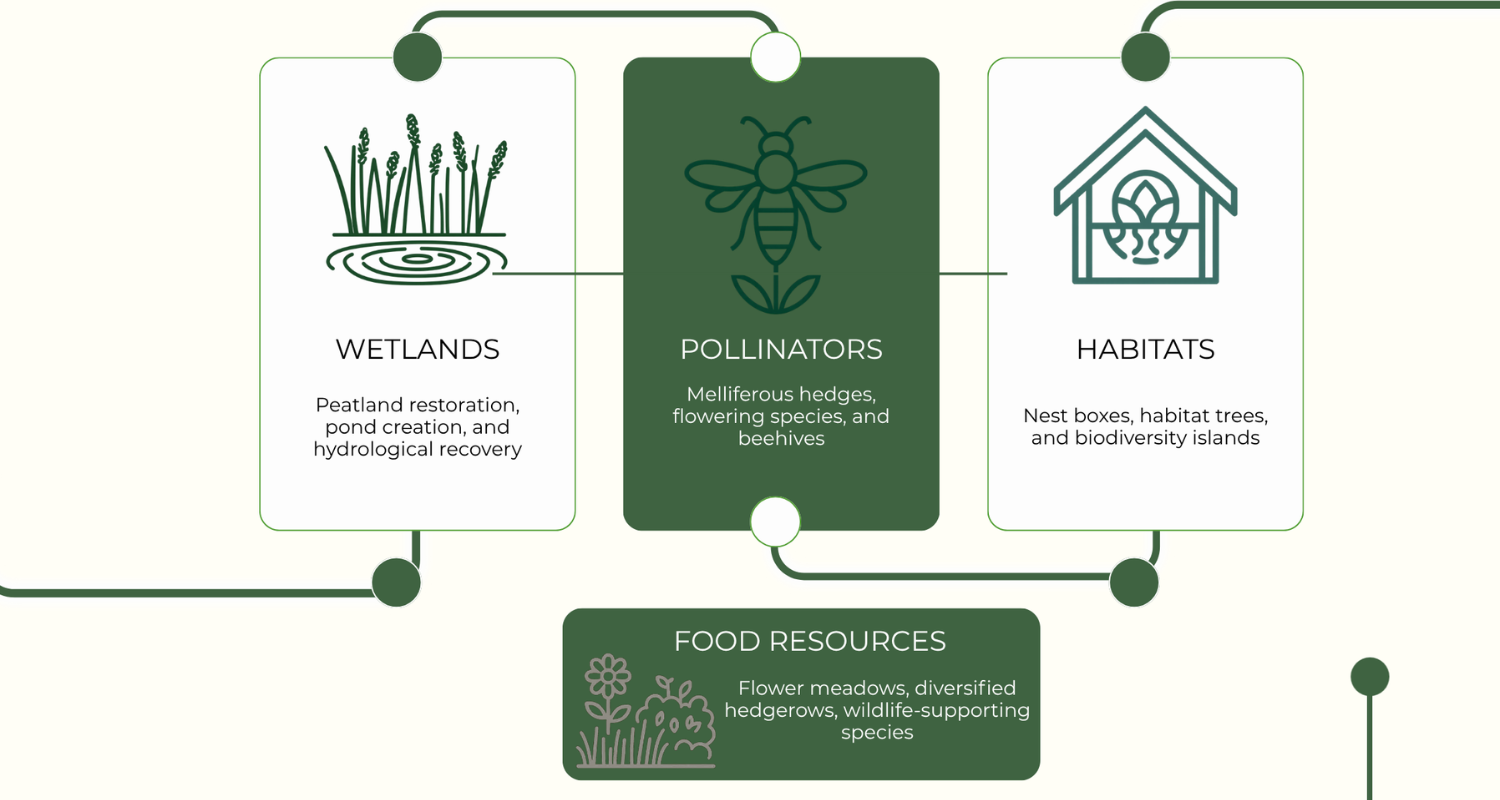
Every organism plays a role in this process. From insects to trees to wildlife habitats, these interconnected systems are what keep forests alive and resilient.
By contributing to an EcoTree project, you directly support these restoration actions: helping to rebuild ecosystems where biodiversity can thrive again.
Because sometimes, the most powerful solution is also the simplest: give nature space, and let it come back.