Jun 9, 2026
What degraded land taught us about conifer trees
From a Danish gravel pit to a storm-hit German forest, see how conifers earn their place in mixed-species restoration.
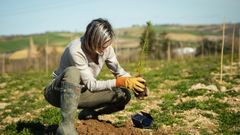
Conifers have a reputation problem. Mention them in a conversation about forests and the same association tends to surface: monocultures, biodiversity deserts, industrial plantations. The criticism is not without basis. Decades of poorly managed conifer monocultures left a mark on landscapes and on the debate.
But the problem was never the tree. It was how it was planted: in rows, at scale, without diversity, without long-term ecological thinking. Managed differently, as part of a mixed-species forest shaped by what the ecosystem actually needs, conifers have a genuine and often underappreciated role to play in forest restoration across Europe.
These are three forests where that argument is not theoretical.
Nysum forest in North Jutland, Denmark: From extraction site to ecosystem
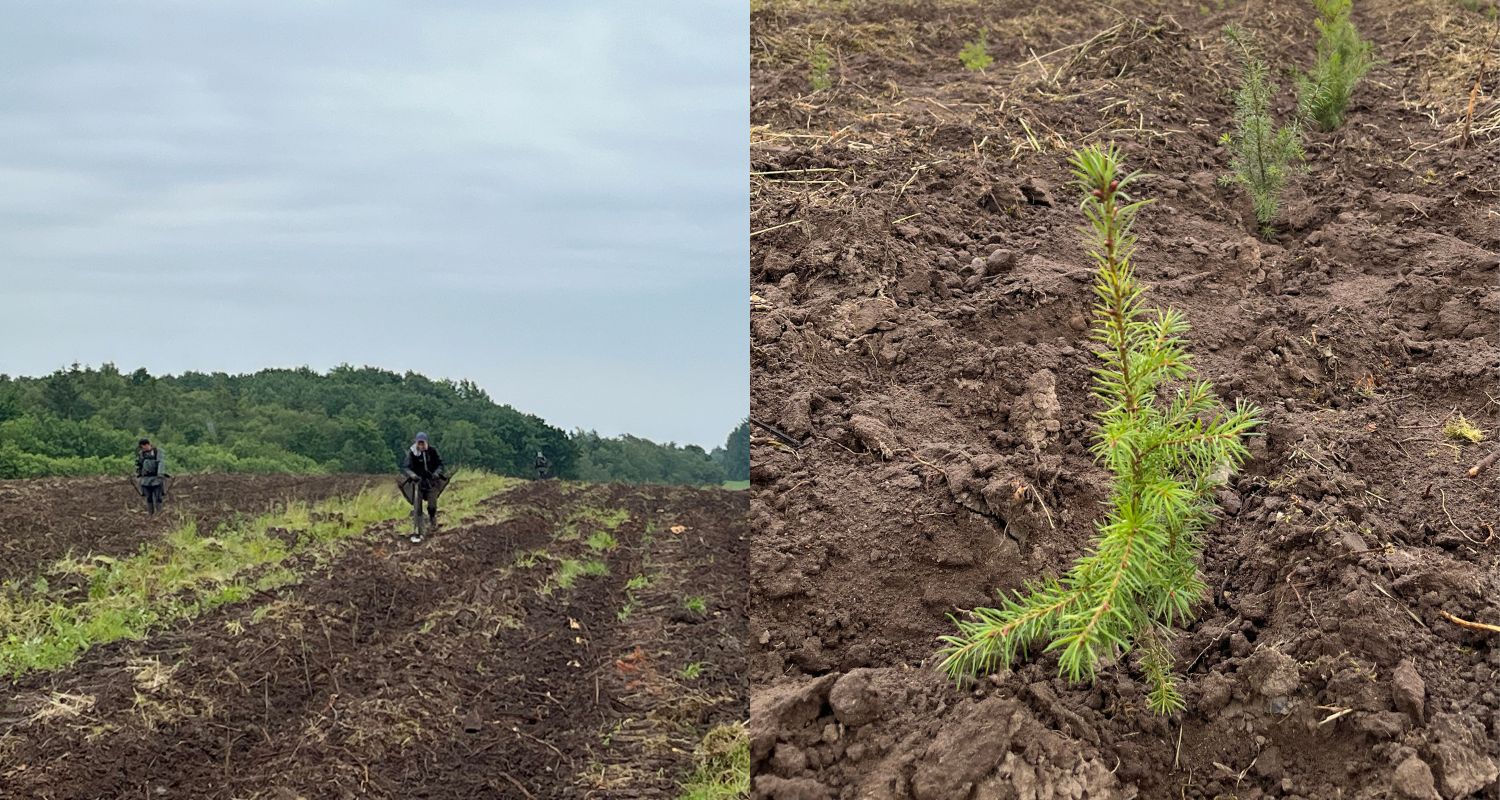
Nysum was an industrial gravel pit. Heavy machinery had worked the ground for years, compacting and depleting the soil before the site was closed and a thin layer of topsoil laid back over it. When EcoTree acquired it in late 2023, there was no forest here. There was potential.
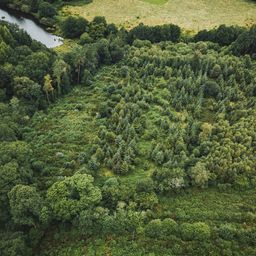
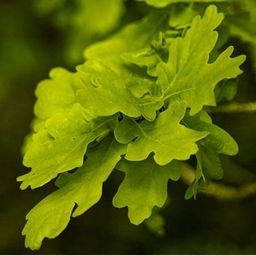
The team has since passed 100,000 trees planted across 31 hectares. The 15+ species mix includes Sitka spruce, Douglas fir and Vancouver fir alongside wild cherry, hazel, pedunculate oak, maple and rowan. The conifers were chosen deliberately: on gravelly, sandy, nutrient-poor soil, they establish where broadleaves struggle, build organic matter, and create the sheltered microclimate that gives other species a chance to take hold.
The site also preserves two forest ponds and a stream running through it. A stand of overmature Christmas trees (Nordmann fir) on part of the parcel is being retained rather than cleared: they provide immediate forest climate and biodiversity habitat while the younger trees develop around them. It is a small but telling detail about what patient, ecosystem-led forestry actually looks like.
Read more about the forestry project in Nysum.
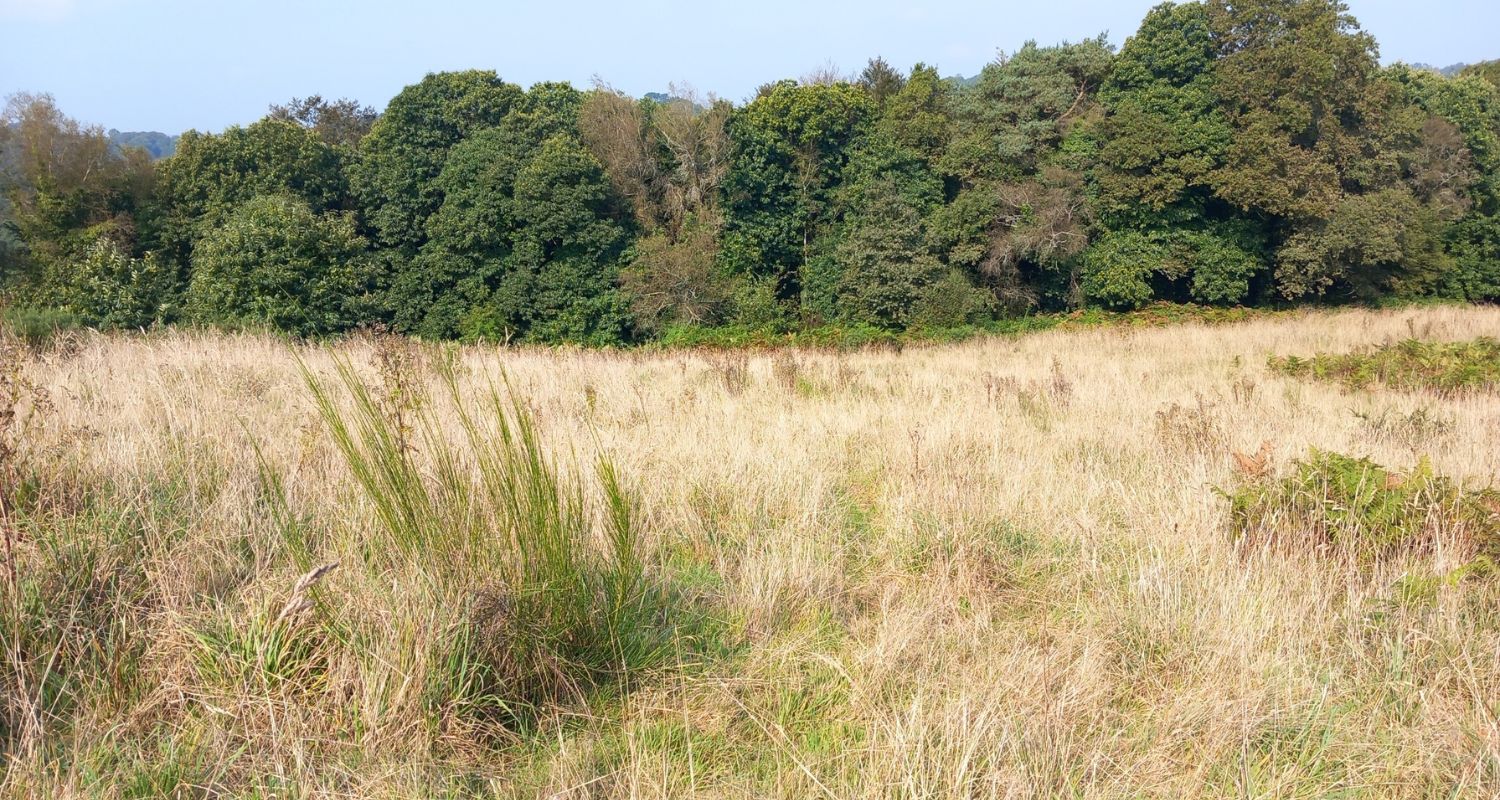
Priziac in Brittany, France: Abandoned farmland becoming forest
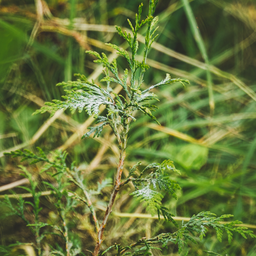
Until 2020, this land in the bocage landscape of Morbihan was farmed for dairy. When the farms disappeared, the plots were left to go fallow. EcoTree acquired the site and is preparing to plant 35,854 trees across 22 hectares in the coming winter season, drawn from 11 species: Sessile oak, wild cherry, chestnut, Douglas fir, Sitka spruce, red cedar and Scots pine, among others.
Scots pine is not a filler species here. On fallow land with degraded soil structure and no existing canopy, Scots pine is one of the few species well-suited to establishing quickly, stabilising the ground, and helping create the forest conditions that allow more demanding species to develop beside it. That sequencing is intentional.
The site sits within a Natura 2000 zone and overlooks two tributaries of the Ellé river. Water quality shapes every decision made on this land. Wetlands are excluded from the planting perimeter entirely, and no phytosanitary products are used.
Explore the work we are doing in the Priziac forest.
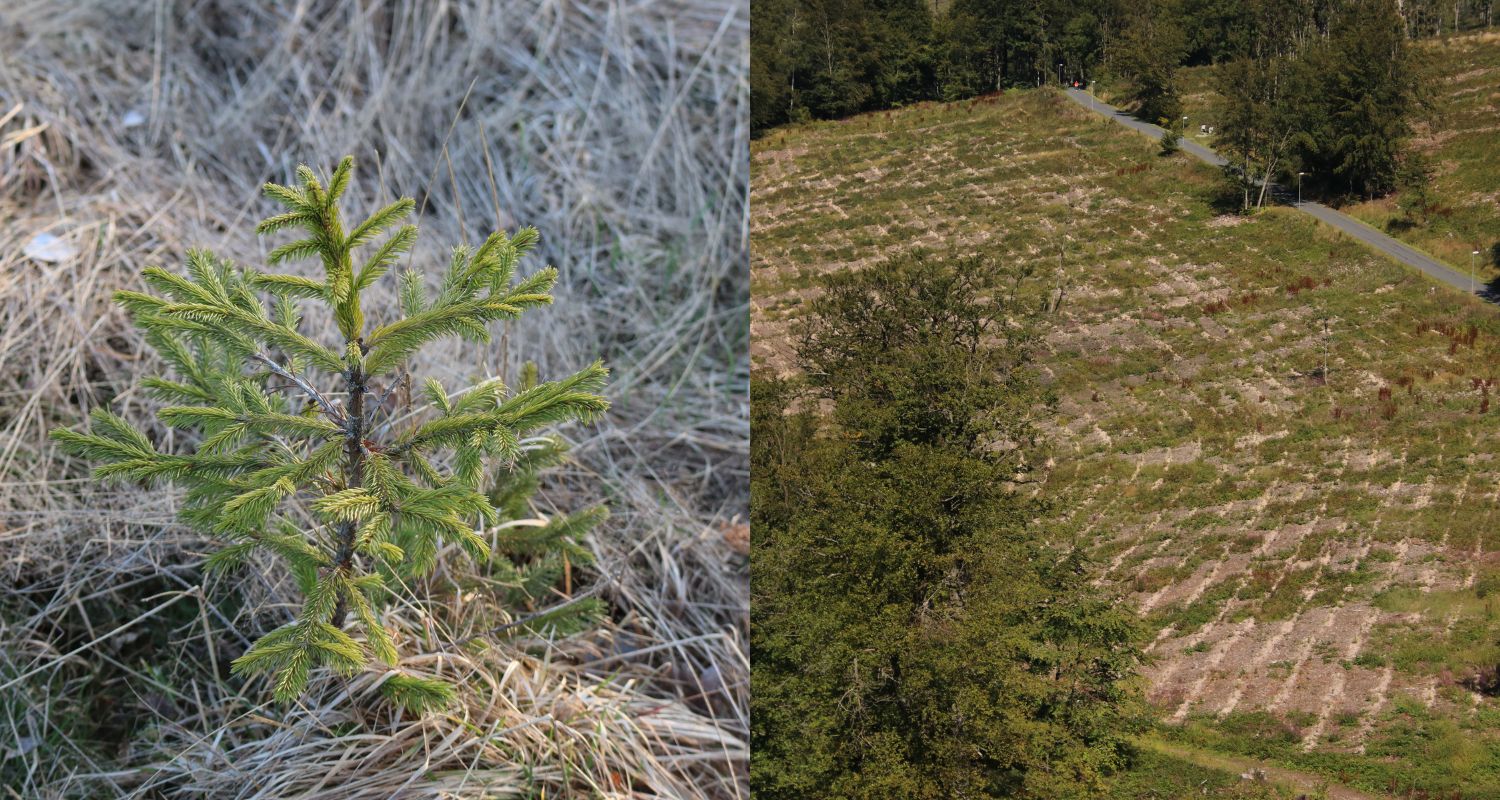
Harz Forest in Stolberg, Germany: Rebuilding after collapse
In 2018, a storm tore through the Harz mountains. The droughts that followed compounded the damage, and by the time EcoTree began its work here in 2023, the forest had lost more than half its tree stand. What had been dense, living woodland had become open and barren in places.
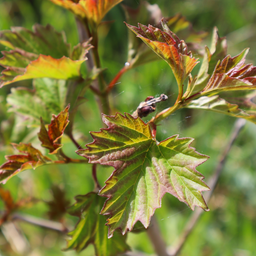
The reforestation plan targets 80% deciduous species and 20% conifers across the site. The mix includes Sycamore Maple, Oak, Chestnut and European Beech alongside Larch, Silver Fir and Douglas Fir. The reasoning is straightforward: a forest rebuilding itself under increasing climate pressure needs species that can handle current conditions, not only the conditions of the past. The conifers are not a concession to speed. They are part of a considered response to what this land now faces.
Read more about this German reforestation project.
The same logic, three times over
Different histories, different ecologies, different challenges. In Brittany, the task is returning ecological function to land that lost it when farming stopped. In northern Jutland, it is building a forest where none existed, on soil that industry left behind. In the Harz, it is helping a forest recover from events that would have been considered exceptional a generation ago and are now becoming more frequent.
In each case, the species mix is shaped by what the ecosystem needs, not by what looks best on paper. Conifers earn their place in that mix not through sentiment, but through function.
That is what mixed-species forestry means in practice.