Jun 10, 2026
Why is the groundwater table dropping in Berlin-Brandenburg, Germany?
From declining groundwater to the river Spree: the water crisis in the Berlin area is complex but solutions already exist.
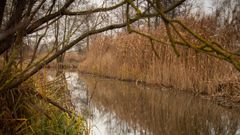
The world is headed towards water bankruptcy (UN Report 2026). The Berlin-Brandenburg region is no exception and must prepare for water scarcity in the years ahead. There are several reasons for this. In this blog, we want to take a closer look and show which solutions already exist and just need to be (re)discovered.
A region under pressure
A UN Water Report from 2026 warns of a global water bankruptcy. Water is either too scarce, too abundant, or too polluted. The Berlin-Brandenburg region in East Germany in particular faces a growing water crisis: droughts arrive earlier, summers are becoming drier and the water level of the Spree river, which flows directly through Berlin, is falling.
Historically once a mosaic landscape of lakes, wetlands, peatlands, and floodplain meadows. Today, the region ranks among the most water-stressed areas in Germany. The declining groundwater table is especially concerning: the city of Berlin, home to nearly four million people, relies heavily on its groundwater.
Why water disappears
The causes of groundwater loss are complex, as a 2025 study shows. In Berlin and Brandenburg, reduced precipitation as well as high evaporation rates are the leading factors of climate change. The straightening of the Spree has also eliminated much of the river's natural water buffer zone. The river water is now channelled directly toward the sea. At the same time the water usage is increasing, used mainly for public drinking water supply, and for agricultural purposes.
Decades of mining have further disrupted the water cycles of the Lausitz, south of Berlin.The Sprees flow volume is decreasing due to the regional phase-out of coal works, which supplied the Spree with substantial artificial recharge. This complex situation calls for a fundamental reorientation of regional and interregional water management in the long term.
Another, less obvious key to understanding the crisis lies in a nearly forgotten system: the so-called Zirren. These shallow, seasonal water channels once flooded the peatlands in natural occurring cycles, of the Spreewald, a vast, wetland forest south of Berlin. In doing so, they served a function that is needed today more than ever, particularly given the partly vanished floodplain landscapes lost to river regulation.
Most of these channels have since fallen into disrepair. What might sound like a footnote in landscape history carries far-reaching consequences for the water cycle, the climate, and biodiversity.
- Water supply: The Spree is losing its natural buffer. This affects not only the Spreewald but all of Berlin.
- Climate change: Drying peat releases stored Carbon as CO₂. A natural carbon sink becomes a source of emissions.
- Biodiversity loss: Amphibian populations in Brandenburg have declined by up to 80% in just 30 years. Shallow, seasonal water bodies that fire-bellied toads, moor frogs, and great crested newts depend on for reproduction are under threat.
- Birds: Lapwings and snipe are disappearing from the wet meadows they rely on as breeding habitat.
What needs to be done: Strengthening natural water reserves
To counter growing water stress, targeted measures are needed to strengthen natural water reserves. Humus-rich soils, close-to-nature forestry, structurally diverse floodplains, and wet peatlands are key to retaining water in the landscape.
This is precisely where the EcoTree Barzlin project comes in: across around a potential area of 146 hectares of peatland in the Upper Spreewald, we are restoring an existing canal network by clearing vegetation and sediment, allowing water to flow slowly across the peat surfaces once again.
This periodic inundation means that:
- Water is retained in the landscape.
- Amphibians are provided with spawning habitats.
- The landscape is reactivated as a natural water reservoir.
The Barzlin project is more than a local initiative. It demonstrates how nature-based solutions can build on existing practises: cost-efficiently, scalably, and with measurable benefits for climate, water, and biodiversity.
Want to learn more about the project?