Nov 23, 2026
What is wetland restoration? A guide for businesses
How wetland restoration works, what restored wetlands deliver for water, carbon and biodiversity, and why it matters for companies in Europe.
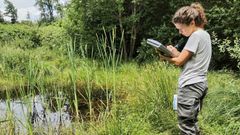
Wetland restoration is the process of returning drained or damaged wetlands to their natural water conditions, so they can store, filter, and slowly release water again. In practice, that usually means raising the water table, reconnecting rivers to their floodplains and letting native vegetation recover.
It matters because wetlands are disappearing faster than any other ecosystem. According to the Ramsar Convention's Global Wetland Outlook 2025, around 22% of the world's wetlands have been lost since 1970. In Europe, losses have slowed, but from a much reduced starting point.
For businesses, wetlands are no longer only a conservation topic. They are part of the water cycle that supply chains, production sites and local communities depend on, and they are increasingly visible in European regulation and sustainability reporting. This guide explains what wetland restoration involves, what it can deliver and why it is becoming relevant for companies.
What counts as a wetland?
A wetland is any area where water covers the soil, or sits just below the surface, for all or part of the year. That shared feature hides a wide variety of landscapes. In Europe, the main types are:
- Peatlands (bogs and fens): waterlogged land where dead plant material, often sphagnum moss, builds up slowly as peat over thousands of years.
- Floodplains and riparian woodland: land along rivers that floods naturally in wet periods, often lined with willow, alder and other water-tolerant trees.
- Marshes: shallow, often seasonal wetlands dominated by reeds, sedges and grasses.
- Wet meadows: grasslands with a high water table, traditionally mown or grazed.
Each type works differently. A raised bog is fed mainly by rainfall, while a fen or floodplain depends on groundwater and rivers. That is why there is no single restoration method: every project starts with how water moves on that specific site.
Why have so many wetlands been lost?
Most European wetlands were not destroyed in one go. They were drained gradually, often with public support, to make land usable for other purposes. The main causes are:
- Drainage for farming and forestry: ditches lower the water table so land can be ploughed, grazed or planted.
- Peat extraction: for fuel and, more recently, for horticultural compost.
- River engineering: straightened and embanked rivers no longer spill onto their floodplains.
- Urban and infrastructure development: building on low-lying, wet land.
The result is landscapes that move water away as fast as possible. That made sense for the land uses of the time. Today, it leaves many catchments more exposed to both droughts and floods, and turns drained peat from a carbon store into a source of emissions.
How does wetland restoration work?
Wetland restoration works by undoing the changes that removed water from the land, then giving vegetation time to recover. The right mix of techniques depends on the site, but most projects draw on four:
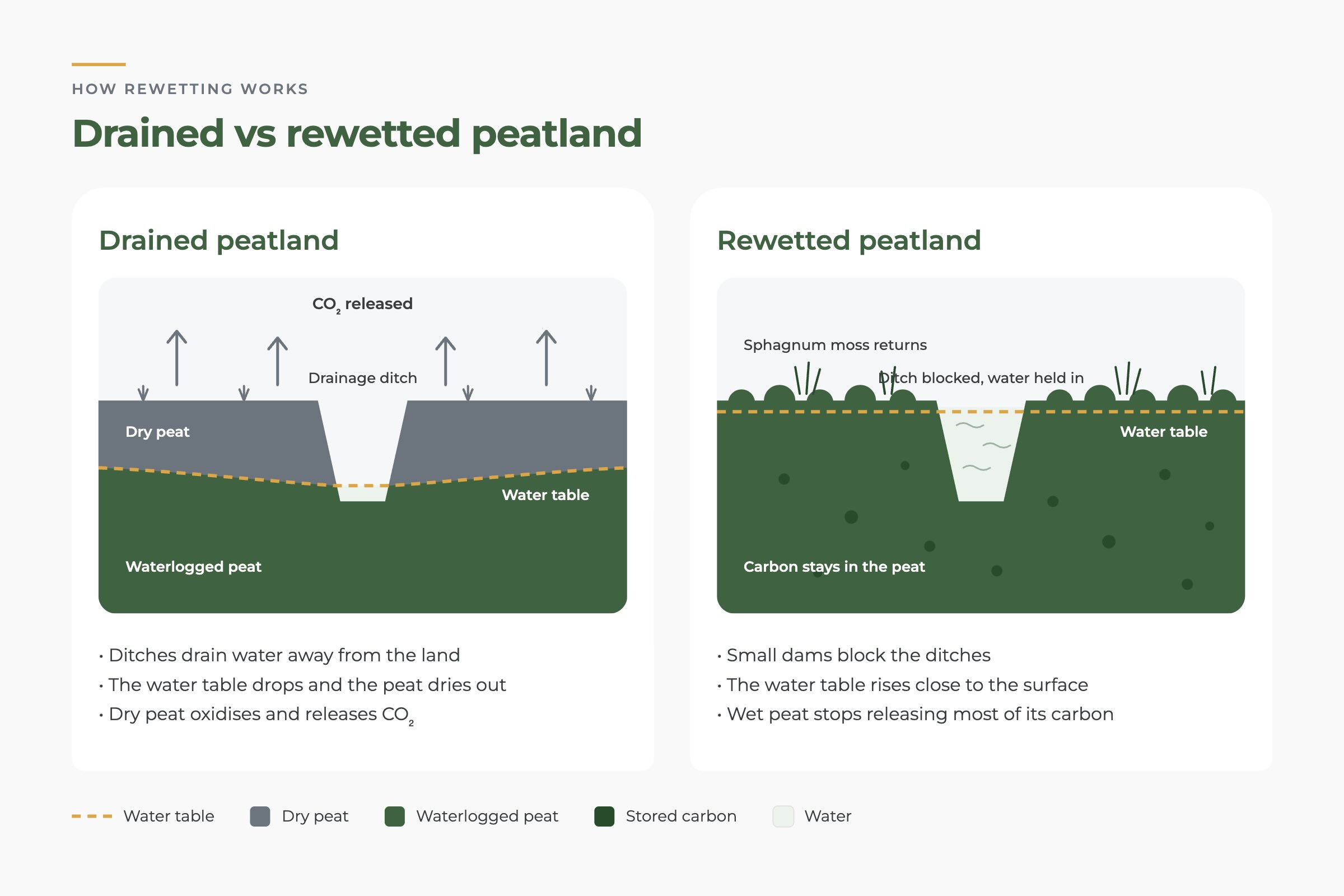
- Blocking drainage ditches
Small dams of peat, wood or earth stop water from draining away, so the water table rises again. On peatlands, this rewetting is usually the single most important step. - Reconnecting rivers to their floodplains
Lowering or opening embankments lets rivers spread out during high water, so floodwater is held in the landscape rather than rushing downstream. - Restoring natural river bends (re-meandering)
A winding river flows more slowly than a straightened one, which gives water more time to seep into soils and groundwater. - Helping native vegetation return
This can mean replanting riparian trees, spreading sphagnum moss on bare peat or removing invasive species and conifer plantations.
Restoration is not instant. Water levels typically respond within months of the works. Vegetation and wildlife take several years to settle, and a peatland can take decades to function fully again. That is why reputable projects are planned and monitored over long periods, often 20 to 30 years.
It also depends on people. Restoration happens on land that someone owns, farms or manages, so projects work with landowners, local authorities and communities from the start.
What do restored wetlands deliver?
A restored wetland can deliver several benefits at once. How much of each depends on the type of wetland, its condition before the works and the local climate, which is why every project is assessed on its own terms.
- Water retention and groundwater recharge
Rewetted soils act like a sponge: they hold rainfall for longer and release it slowly, which can help sustain groundwater and river flows in dry periods. - Natural water filtration
Wetland plants and soils can trap sediment and absorb excess nutrients, which can improve water quality downstream. - Buffering against floods and droughts
By slowing water down in wet periods and storing it for dry ones, restored wetlands can reduce the severity of both extremes locally. - Keeping carbon in the soil
Drained peat oxidises and releases carbon dioxide. According to UNEP's Global Peatlands Assessment, peatlands cover only around 3 to 4% of the world's land but hold up to a third of its soil carbon. Rewetting can stop much of the release from drained peat. - Habitat for biodiversity
Wetlands support specialised plants, insects, amphibians and birds, many of which have declined sharply as wetlands were drained.
These benefits are real but local. A restored wetland supports its own catchment; it does not neutralise water use or emissions elsewhere.
How is the impact of wetland restoration measured?
Impact is measured by comparing the site after restoration with a baseline recorded before the works. Typical indicators include:
- Water table levels, tracked with monitoring wells (piezometers) across the site
- Water quality, such as nutrient and sediment levels downstream
- Vegetation cover and the return of characteristic species
- Soil and greenhouse gas indicators on peatlands
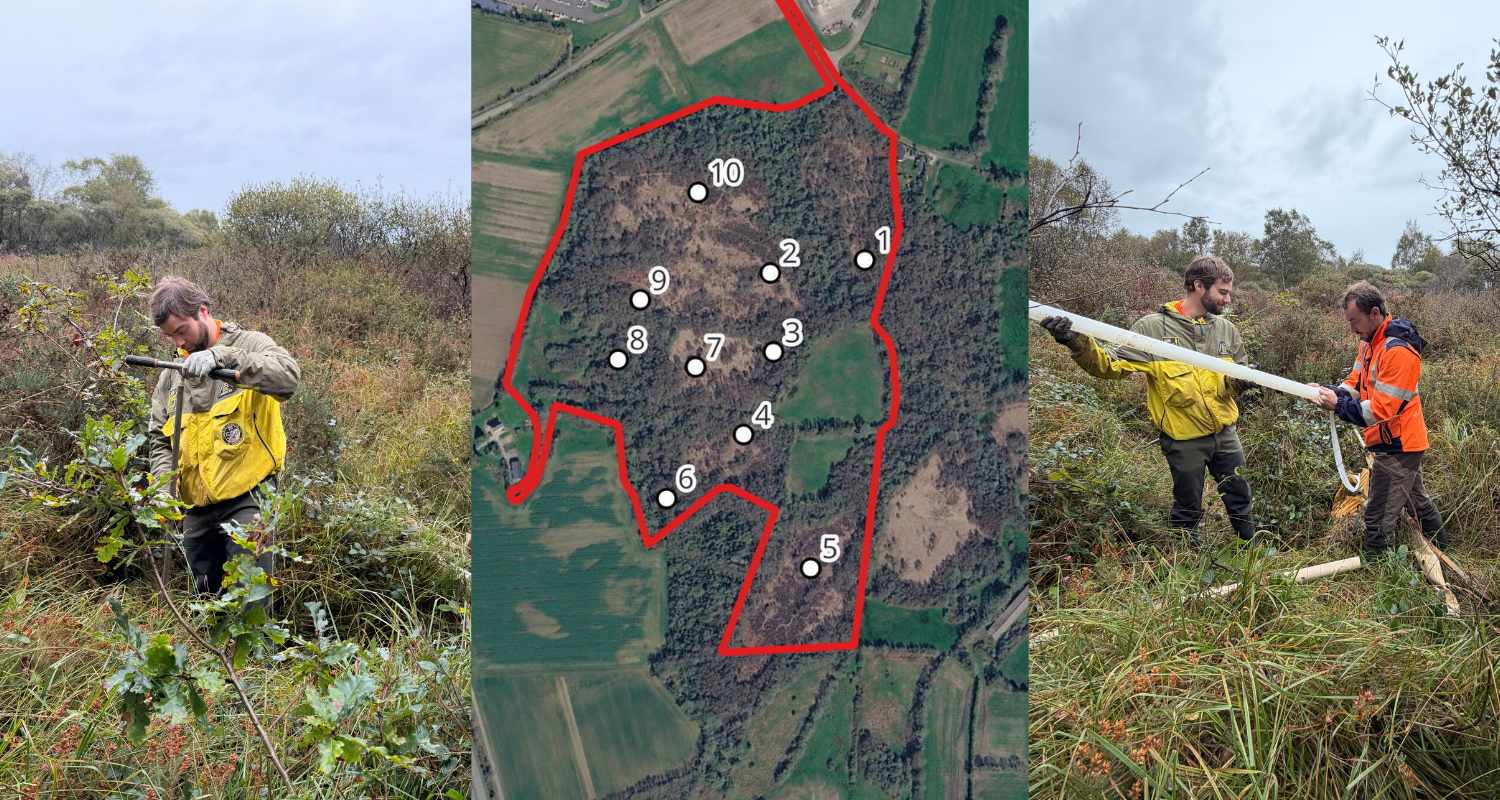
For companies, the key question is whether those results are credible. Independent verification against a recognised standard is what turns monitoring data into evidence you can stand behind. Measured water volumes can also be expressed as certified water credits, so a company's contribution is recorded in a standard unit.
Our white paper explains how that works in detail, with a real use case. Download the white paper.
Why does wetland restoration matter for businesses?
Wetland restoration is moving from a niche conservation topic to a business one, for three reasons.
Regulation is setting the direction
The EU Nature Restoration Law requires member states to put restoration measures in place on at least 20% of EU land and sea areas by 2030, and on all ecosystems in need of restoration by 2050. For drained peatlands in agricultural use, it sets specific targets: measures on at least 30% of these areas by 2030, rising to 50% by 2050, with part of that area rewetted (Linklaters summary). Rewetting stays voluntary for farmers and private landowners, which is where private funding can play a role.
Water and nature are part of sustainability reporting
Under the CSRD, ESRS E3 covers water and marine resources and ESRS E4 covers biodiversity and ecosystems. Companies outside CSRD scope are increasingly asked about both in supplier questionnaires from larger clients.
Many businesses depend on healthy catchments
Food and beverage producers rely on stable water supplies and healthy soils in their sourcing regions. Data centres and other industrial sites need reliable water for cooling and processes. Wetlands are part of the natural infrastructure that keeps those catchments working.
How can companies support wetland restoration?
There are several ways to get involved, depending on your goals and resources:
- Fund certified restoration projects
EcoTree's water credits let companies finance wetland and peatland restoration in Europe, with independently verified results measured in cubic metres of water. - Commission a tailor-made programme in Germany
If you need a project designed around your own sites and water risks, our German sister company RESPOND by EcoTree develops bespoke nature-based projects for companies across Europe. - Go further with our white paper
It explains how water credits work and what they mean for reporting, with a real use case. Download the white paper. - See it for yourself
Project visits are a concrete way to involve your teams and show stakeholders what your support makes possible.
Frequently asked questions
How long does wetland restoration take?
The main works, such as blocking ditches or reshaping a riverbank, usually take weeks to months. Water levels respond soon after. Vegetation and wildlife take several years to recover, and peatlands can take decades to function fully, so projects are typically monitored over 20 to 30 years.
Is peatland restoration the same as wetland restoration?
Peatland restoration is one type of wetland restoration. Peatlands are wetlands where peat has built up over thousands of years, so restoring them focuses on rewetting the peat to keep its carbon in the soil, alongside the water and biodiversity benefits.
Can a restored wetland be damaged again?
Yes, if drainage resumes or the land use changes. That is why credible projects secure the site over the long term, for example through agreements with landowners, and monitor it after the works.
Who carries out wetland restoration?
Usually a project developer working with landowners, ecologists, hydrologists and local contractors, often alongside public authorities or nature organisations. Companies typically contribute through funding rather than carrying out the works themselves.