Feb 13, 2023
Everything you need to know about carbon credits
What is a carbon credit? How do you choose the highest quality ones, and what are the benefits? Find the answers to all of this and more in this blog post.

The carbon credits we offer at EcoTree are validated by Bureau Veritas and are issued as part of sequestration forestry projects.
Carbon credits are a mechanism for fighting climate change. To achieve global carbon neutrality by 2050, the countries united in the Kyoto Protocol established a system of bonuses and penalties for the most polluting sectors to encourage them to avoid, reduce, and "compensate" their emissions of Greenhouse Gases (GHGs).
In this way, companies have set up a voluntary carbon contribution to also participate in this global goal. But why go towards carbon credits? Carbon credits do not replace a company's own efforts: avoiding and reducing emissions come first, and carbon credits can then finance projects that sequester the emissions that remain. Everyone in their place, according to their abilities, can contribute to lightening the weight of the carbon debt we are placing on the world's future.
Carbon credits are, for now, only intended for companies and legal entities whose activity has the most significant impact in tipping the balance in one direction or another. Through Nature-Based Solutions, we can develop forest-based carbon removal projects with mixed species and continuous cover, from which we issue certified carbon credits (i.e. Bureau Veritas or Label Bas Carbone) for your company. In this blog, let’s dive deeper into how EcoTrees carbon credits work.

What is a carbon credit?
A carbon credit is a unit of exchange on the voluntary and regulatory carbon markets. Following the Kyoto Protocol, the participating states developed a quota system that set a threshold of greenhouse gas emissions for companies in the most emitting sectors.
These carbon credits were first created for the most emitting sectors and then later, on the voluntary market, for companies concerned with being part of a contribution to global carbon neutrality without being forced to, giving them a way to finance verified emission removal projects alongside their own reduction efforts.
EcoTree positions itself in the voluntary carbon credits market. The voluntary carbon offset market was implemented at the end of the 2000s at the initiative of companies concerned with participating in the global reduction of GHG emissions. The private sector quickly had imitators, so more companies entered into this process of avoidance, reduction, and "compensation." At EcoTree, however, we use the expression ‘contribution to global neutrality’, which is more meaningful and accurate and does not imply a " given right to pollute."
Its principle is that any individual, company, or community can participate in financing projects that contribute to reducing global GHG emissions. In 2020, 190 million tonnes of CO2 equivalent were sold on the global voluntary carbon market. In November 2021, the global value of the voluntary carbon offset market reached the symbolic threshold of one billion dollars.
According to the French Ministry of Agriculture and Food Sovereignty, "global demand for voluntary carbon credits could be multiplied by 15 by 2030, driven by companies' commitment and the implementation of carbon pricing."
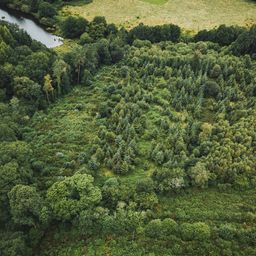
EcoTree provides carbon credits issued under our own carbon methodology, whose applicability to our forestry projects is validated by Bureau Veritas. We also work with the French national standard Label Bas Carbone. The credits represent the removal of carbon emissions achieved through our forestry projects in France, Denmark and Germany, planted and managed as continuous cover, mixed-species forests. By purchasing carbon credits from EcoTree, companies that are already avoiding and reducing their own emissions can contribute to global carbon neutrality by financing forestry projects and actively remove CO2 from the atmosphere.
Get our white paper on carbon credits
How to claim a carbon credit
A carbon credit equals one ton of carbon dioxide, or the equivalent amount of another greenhouse gas (CO2eq) avoided or sequestered. Every type of project that avoids or sequesters one ton of CO2eq and is verified by a recognised, independent third party can earn a carbon credit, provided it meets the following requirements:
1. Additionality
This is based on the concept of a credible baseline scenario (meaning what would happen if no action was taken) and a project that demonstrates that its implementation will reduce GHG emissions.
Carbon credits can, therefore, be obtained by avoiding GHG emissions (“avoidance credits”). For example, the installation of a wind turbine. In this example, the credible baseline produces electric energy through fossil fuels (petrol, carbon, gas, etc.). We aim to produce the same amount of electric energy with a wind turbine as fossil fuels. There is a clear difference in GHG emissions between the two.
These credits can also pertain to carbon dioxide (re)captured from the atmosphere due to creating a carbon sink. Take a forestry project, for example. In the credible baseline, there’s an agricultural plot that we want to forest. This cultivable land sequesters carbon dioxide (up to 5 tCO2eq/ha). The number of carbon credits that could be issued is equal to the amount of CO2eq/ha sequestered due to the forestry project minus the 5 tCO2eq/ha that would have been sequestered either way without forestation.
The additionality requirement is met only if it is proven that forestation allows the sequestration of more carbon dioxide than the credible baseline. To prove it, one must be able to calculate it. Ex-ante carbon credits are issued in anticipation of the project's additionality, while ex-post credits are issued only once the project exceeds the credible baseline (i.e., CO2eq absorption is higher).
Additionality must also be financial: the project in question cannot be financed without a valuation on carbon credits. In EcoTree’s case, the forest would not be planted without financial aid from a corporate partner who would earn as many carbon credits as the tons of carbon that this forest is slated to sequester over time.
Additionality can also be regulatory. For example, if an organisation is legally required to plant a forest, it cannot earn carbon credits from the forestation as the credible baseline in this case would include the forest anyway.
2. Permanence
Carbon avoidance or sequestration must be irreversible, meaning it is maintained indefinitely (as it’s impossible to stop global warming by sequestering carbon for only seven years). However, considering a tree a living organism, its lifespan is limited. Sooner or later, it will decompose in the forest or be felled for its wood.
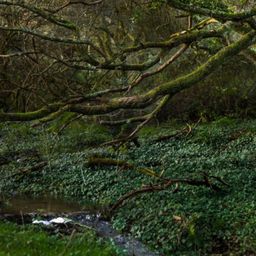
Even though carbon can be stored in a wooden structure for centuries, the carbon contained within this wood will inevitably return to the atmosphere in the near future. That’s why permanence exists not in a single tree but an entire forest.
A sapling will replace a mature tree, and the cycle will continue. Thus, the average carbon stock of the whole forest can only be calculated.
To better understand this, imagine a beehive: from the beekeeper’s perspective, the colony endures, but the lifespan of a single bee is very short. Even if the individual bees are constantly replenished, they make up the same colony that lives in the same hive.
3. Measurability
The tons of carbon dioxide (and equivalents) that are avoided or sequestered must be measurable. In the wind turbine example, the electrical output is measured. In the forest example, the CO2eq sequestered and/or stocked is directly calculated from the volume of hardwood measured on the tract of land with or without thinning.
4. Uniqueness
It is impossible to claim a single unit of carbon avoided or sequestered more than once. For this reason, each credit must be registered in a dedicated register.
5. Verifiability
A carbon credit-worthy project must be verified, validated, or certified by an independent, third-party organisation.

What does a carbon credit cost?
The price of a carbon credit varies depending on the market and the emission reduction or sequestration project being financed. For example, a carbon credit covering the installation of solar panels that will prevent a certain number of CO2 eq emissions will cost less than a carbon credit issued by a close-to-nature forestry project.
This is because installing solar panels (without government or community support) has a significant initial cost but very low maintenance costs over time. The panels prevent a certain number of emissions but do not capture those already emitted, which is the only way to achieve a global carbon balance.
On the other hand, planting trees and maintaining a forest according to the principles of continuous cover management has a regular cost that exceeds the simple cost of planting and allows the active sequestration of CO2.
In the context of what we do at EcoTree, we must take into account the planting of trees and their protection, the clearing work that takes place in the first years, possible regrowth, thinning and harvesting, which is the entirety of the work and forest monitoring aimed at leading the plot towards an uneven forest. This results in a longer-lasting sequestration project, as a managed forest outlives a solar installation. Because the forest is mixed-species and never clear-cut, it also provides habitat for a wider range of species.
Which carbon credits should you avoid?
Carbon credits that should be avoided, even though they may be cheaper to buy, are those that take a light approach to a project's environmental, social and cultural impact.
For example, we read here and there that "carbon avoidance or sequestration must be long-term (at least 5 to 7 years)." Five to seven years is a very short period, and it will not help us reach the goal of carbon neutrality by 2050.
On the other hand, obtaining a carbon credit by funding the planting of a mixed-species forest supports a potentially infinite sequestration project: the trees will be harvested as needed but will always be replaced by new plantings or natural regeneration, so the forest will be there as long as nature allows it. It's a whole different time scale.
Other projects to avoid are tree plantings (not necessarily forests) on the other side of the world. In theory, whether you sequester CO2 here or there is the same. Avoided deforestation credits, common in some regions, rely on a baseline scenario in which the forest would otherwise be cut down. Their integrity therefore depends on how credible that baseline is, which is worth checking carefully before buying.
The social dimension is also important: does the project benefit the local economy? Is it justified on a population scale? Buying carbon credits that would fund tree monoculture plantations on the other side of the world, depriving the population of arable land, would be a worse solution than the problem.
In this sense, it is better to avoid carbon credits that do not have a measurable positive impact on the local population or biodiversity or do not fit into a long-term scheme for the sequestration of greenhouse gas emissions.
The advantages of EcoTrees quality carbon credits
To meet the five requirements set out above (additionality, permanence, measurability, uniqueness and verifiability), we have developed our own carbon methodology, whose applicability to our forestry projects is validated by the certification body Bureau Veritas.
While most forestry methods, such as LBC or Verra, calculate carbon credits by repeating a pattern that results in clear-cuts, we have developed our own carbon methodology to issue carbon credits that take into account the specificity of our continuous cover forestry management.
Companies choose our carbon credits because each one is calculated from measured timber volume and issued under a methodology validated by Bureau Veritas.
The price of the carbon credits we issue is in line with the market, even though the requirements we have set for ourselves are higher than those of common certification methods.
In addition to obtaining certified carbon removal credits, our partners can become owners of the trees in the forest created as part of their sequestration project, allowing them to get even more involved.
Thanks to this specificity, their initial investment becomes profitable: indeed, the trees are an asset; their annual value is estimated at 2%. Not only do our projects focus on restoring the ecosystem, but it also involves local actors (in France and Denmark) in social projects, and they also generate income from selective tree harvests.
EcoTree: Your Nature-Based Solutions provider
We aim to contribute to global carbon neutrality by supporting natural projects that lead to a richer biological life on Earth. That's why our main business is forestry: mixed-species, continuous-cover forests are conducive to life; they enrich and protect biodiversity; they produce renewable raw materials for industry, construction, furniture, and energy; they contribute to the beauty of the world, public access, etc.
Thus, instead of technological carbon capture solutions, we prefer Nature-Based Solutions, which are permanent and only positively impact life. Given the time nature requires to sequester carbon and that terrestrial resources are not unlimited, carbon credits issued by Nature-Based Solutions such as the ones we develop are expected to increase in value in the years to come and achieving carbon neutrality by 2050 cannot be delayed.
If the best time to reduce, sequester, and contribute to global neutrality was yesterday, the second-best time is today!
Discover more!
- Download our white paper 'How to Choose High-Quality Carbon Credits' or '10 Questions to Ask Before Committing to Carbon Contribution',
- Read our Carbon Manifesto,
- Learn more about carbon offsetting for companies.
Updated at 11:55 (CET) on September 25, 2026.