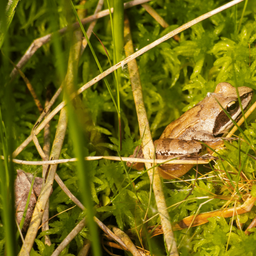
Let's protect biodiversity together!
Contribute to one of our biodiversity projects to help us restore and maintain vital natural habitats.
Our biodiversity projects
Join us in supporting biodiversity restoration and conservation projects that focus on creating and preserving natural habitats, boosting pollination, and driving positive social change.


- Pollination
- Social impact / Awareness
- Habitats
- Water conservation

- Social impact / Awareness
- Pollination
- Habitats
- Water conservation

- Social impact / Awareness
- Pollination
- Habitats
- Water conservation

- Water conservation
- Pollination
- Social impact / Awareness
- Habitats
- Water conservation
- Habitats
- Water conservation
Co-benefits of preserving and restoring biodiveristy
Biodiversity is at the heart of all our restoration and preservation projects. Our mixed-species, continuous forestry and wetland restoration initiatives go beyond mere carbon credits, delivering a wide array of co-benefits:
Enhancing ecosystem health and resilience
Diverse ecosystems exhibit greater resilience, enabling them to better withstand climate change, pests, and diseases.
Conserving local wildlife
Restoring habitats is crucial for the preservation and promotion of native species, including those that are endangered.
Managing water resources
Healthy ecosystems are vital for retaining water, reducing soil erosion, and ensuring the purity of our waterways.
How does it work?
How does it work?
Your contribution goes directly to the biodiversity actions in the forest you have chosen to support.
Our experts manage and measure the impact that these actions have on the forest ecosystem.
We share an activity report when there are updates from the project, providing you with insights into the progress and impact of the project.
We take a long-term approach and continue to work and report on the project for a minimum of 20 years.

Your action comes with these advantages
Biodiversity certificate
Download your biodiversity certificate on your account
Personal account
Explore your projects and see their location
Project updates & visits
Update reports and invitations to planned project visits
Louise, our in-house biodiversity expert
Louise, our in-house biodiversity expert

FAQ
What are the consequences of biodiversity loss?
Biodiversity loss affects far more than wildlife. It directly impacts ecosystems, climate stability, and our daily lives in Europe. More 55% of the global GDP is dependent on biodiversity and natural resources, and according to the European Environment Agency (EEA), over 80% of protected habitats and 63% of protected species in the EU are in poor or bad conservation status. The loss of biodiversity has a number of consequences. Here are four consequences we'd like to highlight:
- Pollinators are declining: Bees, butterflies and other pollinators that are essential for food production are declining because their food resources and habitats are disappearing. In Europe, one in three bee and butterfly species is declining, threatening crops and wild plants alike.
- Water cycles are disrupted: Healthy ecosystems help filter water, retain moisture and reduce flood and drought risks. Biodiversity loss weakens these natural protections.
- Climate resilience is reduced: Diverse forests and landscapes store carbon more effectively and are more resistant to heatwaves, storms and disease. When biodiversity declines, ecosystems become more fragile.
- Human well-being is affected: From clean air and water to food security and mental health, biodiversity underpins many aspects of quality of life.
Protecting biodiversity means protecting the natural systems that support life, including our own. You can read about the 1 billion reasons why it's important to preserve biodiversity here.
What is biodiversity conservation?
Biodiversity conservation means protecting, restoring and sustainably managing nature so ecosystems can continue to function and support life. - Biodiversity includes all living systems: plants, animals, insects, microorganisms and the ecosystems they form together.
- Conservation goes beyond protection, also involving restoring degraded habitats and improving how land and forests are managed.
- Healthy ecosystems provide essential services such as clean water, fertile soils, pollination, climate regulation and natural flood protection.
- Long-term management and follow-up are key. This is done by focusing on resilience, ensuring ecosystems can adapt to climate change and continue to thrive over time.
In Europe, biodiversity conservation is a priority, as the EU has recognised biodiversity loss as a major environmental risk and is investing in ecosystem restoration and nature protection.
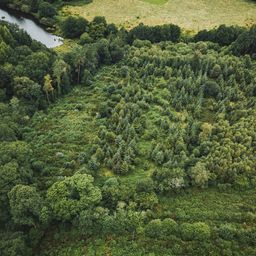
At EcoTree, biodiversity conservation means supporting practical, on-the-ground actions such as restoring forests and wetlands, encouraging mixed-species forest ecosystems with continuous forest cover, and creating habitats that allow nature to recover naturally.
Meet our team of experts, who work in the field to manage, measure, and ensure that the biodiversity actions we implement are having a positive impact.
Why are forests crucial for biodiversity?
Forests are essential for biodiversity. They're home to most of Europe's wildlife and provide vital ecosystem services:
- A haven for species: Forests support over 80% of terrestrial biodiversity, providing habitats and food for plants, animals, and insects.
- Climate regulation: Trees absorb CO2, acting as important carbon sinks and helping mitigate climate change. Learn how much CO2 a tree absorbs.
- Resilience through diversity: Mixed-species forests are key to more resilient ecosystems, as they are better able to withstand disease, pests, and climate change.
- Critical services for life: From water regulation to pollination and soil protection, forests are foundational to healthy ecosystems.
At EcoTree, we focus on planting diverse, sustainable forests that promote biodiversity and fight climate change. Learn more about our reforestation projects and how you can get involved in protecting Europe's forests.
How can I contribute to biodiversity projects?
Contributing to one or multiple of our biodiversity projects is a meaningful way to support nature and help restore vital ecosystems. Your contribution directly helps to:
- Support the restoration of vital habitats such as wetlands, forests, and meadows, which are home to countless species.
- Protect endangered species including pollinators like bees and butterflies.
- Restore ecosystems that have been impacted by human activity.
- Develop projects that manage ecosystems in a way that balances human needs with the health of ecosystems, ensuring long-term sustainability.
Where are EcoTree's biodiversity projects located?
EcoTree has a European scope, and is currently actively working on biodiversity projects in France and Denmark, focusing on enhancing and restoring local ecosystems. You can see the location, details, actions and impact of each project under the 'project details' of the project card.
Our projects in France encompass diverse ecosystems. For example, we are working on a wetland restoration project in our Langoëlan forest and an ecosystem restoration project in our Nouic forest.
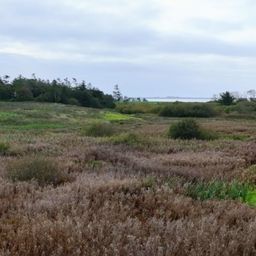
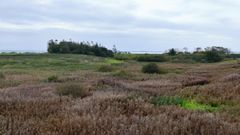
In Denmark, we are restoring a wetland next to our Thisted forest, and we will be improving the natural habitats for birds and bats in our Nysum forest.
How do I know my contribution is making a difference?
Transparency and impact measurement are vital to our work, so you can see exactly how your contribution is helping biodiversity projects. We track specific metrics such as species count, habitat quality, and ecosystem health, so you can see the measurable results of your support.
We'll share project updates as they happen via our Newsletter and social media platforms such as Instagram, and you can also expect a detailed annual report. This yearly report includes visuals, like before and after photos, and key performance indicators (KPIs) to show the full picture.
You'll receive these updates and reports through your EcoTree account and via email, ensuring you're always connected to the positive impact of your actions.
To check your contributions and see which projects your contribution has gone to, log into your EcoTree Account.
How do you measure the impact of biodiversity projects?
To ensure that our biodiversity projects are delivering measurable, positive impacts, we use a combination of quantitative data and ecological indicators, monitored using established scientific methods:
- Species monitoring: We track the abundance and diversity of species in project areas through regular fauna and flora surveys, including species inventories and biodiversity indices such as Shannon and Simpson's Diversity Index.
- Habitat assessment: Habitat quality is measured using Habitat Suitability Indices (HSI) and vegetation cover surveys, which assess the structural complexity and vegetative diversity of restored areas.
- Carbon sequestration: We measure the carbon sequestration potential of restored ecosystems using biomass calculations and carbon modelling tools to quantify the amount of carbon stored in vegetation and soils over time.
- Water quality and retention: For wetland restoration, we assess water quality, water table levels, and hydrological functioning using tools like streamflow monitoring and wetland vegetation surveys.
- Long-term impact evaluation: We continuously monitor the long-term resilience of ecosystems through repeat surveys and control sites to track changes and ensure that biodiversity and ecosystem functions are sustained.
These methods are part of our scientifically rigorous approach, and results are shared with you through technical reports and data dashboards, providing full transparency on the impact of your support.
Can I visit the biodiversity projects I support?
Access to biodiversity projects depends on ecological sensitivity, safety and local conditions. Many projects are active restoration sites where access is limited to protect habitats and wildlife.
When conditions allow, we can organise guided visits or open days. However, when visits are not possible, we provide photos, maps and technical updates to show on-the-ground progress.
If you are interested in visiting a project, you can always contact the EcoTree team to discuss possibilities and site-specific conditions.
Can I make a contribution as a gift for someone?
Gifting a biodiversity contribution is a meaningful and lasting way to celebrate a special occasion while supporting nature. It supports real ecosystem restoration, helping protect habitats, water resources and wildlife. It's a gift with long-term impact, rooted in nature and local action.
How the gifting process works:
- Choose the biodiversity project you want to support
- Add it to your cart and select "Give as a gift"
- Follow the gifting steps to personalise your contribution
Personalise your gift: You can choose to send the gift by email or as a downloadable PDF, and add a personal message to make it truly unique.
The recipient receives an explanation of the biodiversity project they are supporting, making it a thoughtful, transparent and impactful gift.
Is my biodiversity contribution a one-time action or a long-term impact?
Your contribution may only be made once (or more if you wish to do so), but it supports a long-term biodiversity project.
Biodiversity restoration does not happen overnight. Even with a one-time contribution, you are helping fund projects that are designed to restore ecosystems over many years, allowing habitats, species and natural processes to recover and strengthen over time:
Ecosystems develop gradually: Forests, wetlands and habitats continue to evolve as vegetation matures and biodiversity increases.
Long-term project management: Contributions support restoration, maintenance and ecological monitoring beyond the initial action.
Lasting impact: The benefits for biodiversity, water and ecosystem resilience continue well after your contribution is made.
By contributing once (or multiple times), you help set long-term nature restoration in motion, creating impact that lasts.